
Camera Reviews
Nikon FE2 Review: The Best Manual-Focus Nikon You Can Actually Afford
Daydream Editorial
· 8 min read
Verdict
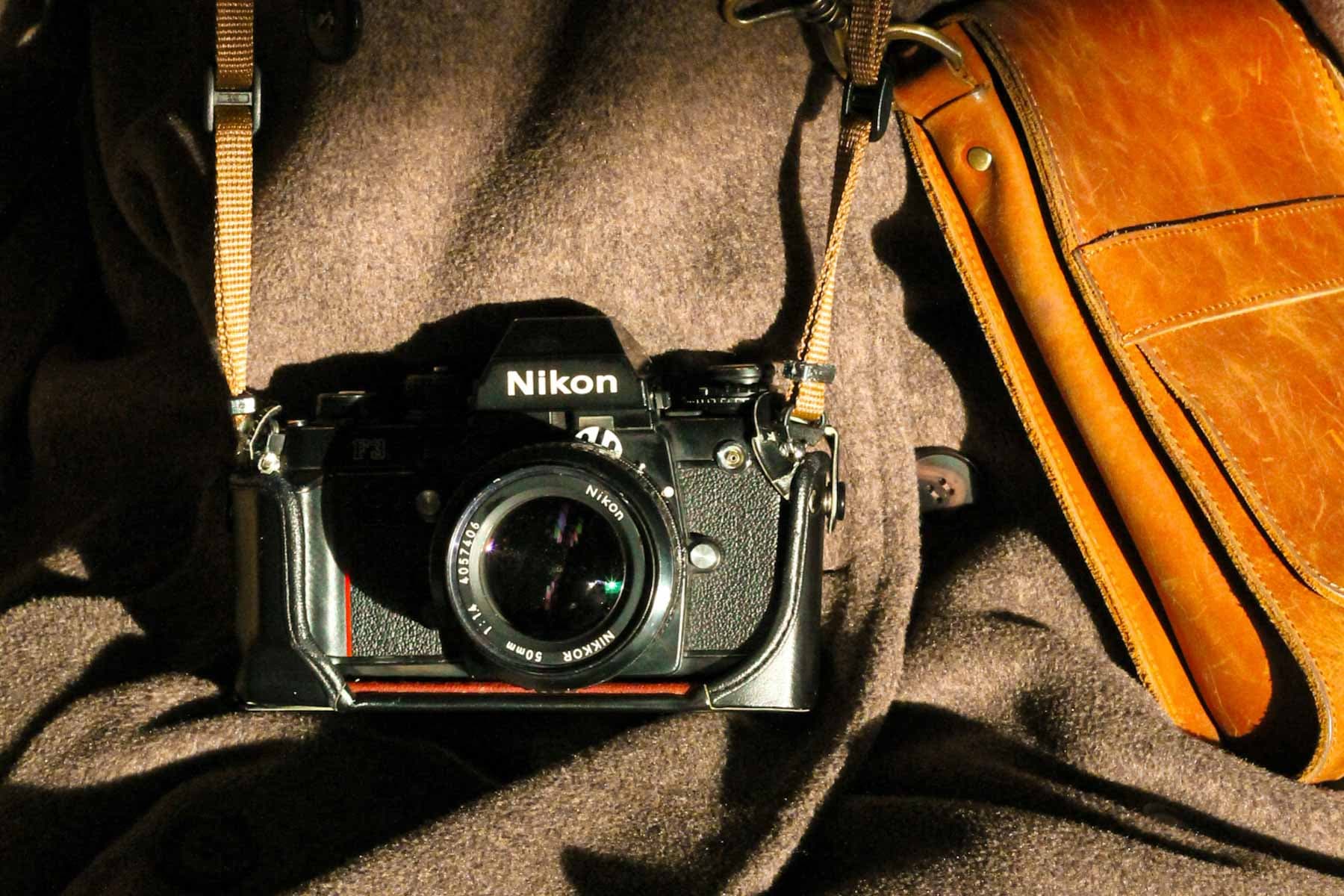
The Nikon FE2 is a compact 35mm SLR with a blazing 1/4000s titanium shutter, aperture priority automation, and exceptional build quality. It delivers a bright viewfinder, intuitive needle-matching metering, and access to legendary Nikkor AI/AI-S glass. The camera feels precision-engineered with ball-bearing film advance and superb damping. At $200-350, it's the best value in manual-focus Nikon SLRs. The only reason not to buy one: you can afford the FM3a.
Film photographers agree the Nikon FE2 is one of the finest manual-focus SLRs Nikon produced, but it lives in the shadow of the legendary FM3a. The debate: does the FM3a's hybrid shutter and mechanical backup justify its $1,500 price versus the FE2's $200-350? Most conclude the FE2 delivers 95% of the FM3a experience at one-fifth the cost.
Background & Key Features
Nikon released the FE2 in 1983 as an evolution of the 1978 FE, incorporating the blazing titanium shutter technology from the 1982 FM2. Nikon positioned it as a compact semi-professional SLR for enthusiasts and as a backup body for professionals who needed something lighter than the F3. It hit the sweet spot between features and portability.
Key features include a vertical-travel titanium shutter running from 8 seconds to 1/4000s (the fastest in its class), aperture priority automation that just works, center-weighted TTL metering (EV 1-18), exposure compensation (±2 stops in 1/3-stop increments), 1/250s flash sync (world's fastest when released), interchangeable Type K2 focusing screens, and AI/AI-S lens compatibility giving you access to legendary Nikkor glass. At 550g, it balances portability with professional build quality beautifully.
The FE2 remained in production until 1987 but was sold through 2001, which speaks to its enduring appeal. Nikon knew they had a winner.
Design & Handling
The FE2 feels exceptional at 550g, substantial enough to inspire confidence but light enough for all-day shooting without your shoulder complaining. Metal chassis with alloy body plates creates genuine durability. Every control actuates with perfect resistance, nothing feels loose or cheap. The ball-bearing film advance is smooth and fluid, ratcheting with satisfying clockwork clicks that make you want to advance the film just to hear it.
The viewfinder is genuinely gorgeous, big and bright, among the best in manual-focus SLRs. It displays a shutter speed scale with two needles (green for your selected speed, black for the meter reading), aperture above the frame, and a red LED when exposure compensation is active. The needle-matching system is intuitive, showing not just whether you're accurate but by how far your settings are off. The Type K2 focusing screen with split-image rangefinder makes focusing effortless, even in marginal light.
Controls are succinct and logical. Aperture via the lens ring. Shutter speed via the top dial. ISO setting, exposure compensation (±2 stops), depth-of-field preview, AE lock (press the self-timer lever inward, which is clever). The camera turns on when you pull the film advance lever out, activating the meter with a half-press of the shutter release. The meter auto-shuts off after 15 seconds to save battery, which is smart engineering.
How the Nikon FE2 Shoots: Portrait Photography and Street Photography Performance
Metering & exposure behavior
The 60/40 center-weighted TTL metering is consistently accurate, nailing exposure in most lighting conditions. The silicon photodiode sensors provide reliable readings from EV 1-18. The needle-matching display makes manual exposure intuitive—match the green needle to the black meter needle by adjusting aperture or shutter speed. In aperture priority mode, set the shutter dial to "A" and the camera selects appropriate shutter speed automatically.
Exposure compensation (±2 stops in 1/3-stop increments) provides fine control, though the locking dial is fiddly—you must press a tiny button for every increment adjustment. A red LED in the viewfinder indicates when compensation is active. The AE lock works excellently, locking the meter needle stationary when engaged.
Focusing experience
The bright viewfinder with split-image rangefinder makes focusing fast and accurate. The 93% coverage is effectively 100% in practice. Even with grid focusing screens, the FE2 is easy to focus in almost any lighting. The depth-of-field preview lever allows checking focus range before shooting. The camera becomes transparent in use, allowing focus on image creation rather than camera operation.
Lens character & shutter performance
The FE2's titanium shutter is genuinely the star feature here. The 1/4000s maximum speed enables shooting at f/1.2 or f/1.4 in bright daylight without ND filters, which is critical for shallow depth-of-field portrait work. Want that creamy bokeh at noon? The FE2 lets you do it. The 1/250s flash sync was the world's fastest when released in 1983, which mattered for fill flash work.
The shutter is properly dampened with a rotating flywheel and inertial mass damping, which eliminates the need for mirror lock-up even on a tripod. The shutter fires with a solid clack that feels mechanical and satisfying, and the damping is so effective that tripod work at slow speeds shows no blur from shutter slap. It's engineering done right.
The mechanical backup shutter operates at 1/250s when batteries die, so you can still shoot in an emergency. The eight-blade design and 3.3ms travel time create smooth, reliable operation. Battery life is excellent, with two LR44 batteries lasting eight months of regular shooting. You'll forget the camera even needs batteries.
Lens compatibility & image quality
The FE2 accepts any Nikon AI or AI-S F-mount lens, providing access to over 70 manual-focus Nikkor lenses produced during the FE2 era. These legendary optics deliver exceptional sharpness, contrast, and color rendition. The Nikkor 50mm f/1.8 pancake, 28mm f/2.8, 35mm f/1.4, and 105mm f/2.5 are particularly excellent pairings. AF Type-D lenses with aperture rings also work, though focusing may be tricky without proper resistance.
Image quality depends entirely on lens choice, but Nikkor glass from this era is legendary. Sharp corner-to-corner, excellent contrast, beautiful color rendering, and smooth bokeh characterize these lenses.
Film pairings that sing
- Kodak Portra 400 for versatile shooting with beautiful skin tones and forgiving latitude
- Kodak Tri-X 400 for classic black and white with rich contrast
- Kodak Ektar 100 for vibrant colors and maximum sharpness
- Ilford HP5 Plus for black and white with excellent tonal range
Best Uses: Portrait Photography, Street Photography, and Travel Photography
Best at: Portrait photography (1/4000s shutter enables f/1.2-f/1.4 in daylight), street photography (compact, responsive), travel photography (lightweight, aperture priority), shallow depth-of-field work
Struggles with: Exposure compensation dial is fiddly, meter doesn't activate until frame 1, requires batteries (unlike mechanical FM2)
If this is you → pick this body:
- "I want aperture priority and fast shutter at reasonable price" → Nikon FE2
- "I want the absolute best with mechanical backup" → Nikon FM3a ($1,500)
- "I want all-mechanical operation" → Nikon FM2n
Nikon FE2 vs FM3a, F3, and FM2n
The FM3a is objectively better, with its hybrid shutter that works without batteries and combines the best of both worlds. But it costs $1,500 versus $200-350 for the FE2. The FM3a delivers 100% of the experience; the FE2 delivers 95% at one-fifth the price. That's the value proposition in a nutshell.
The F3 offers professional build and interchangeable prisms for specialized work, but it's larger, heavier, with a slower 1/2000s shutter and 1/80s flash sync. It's a studio camera more than a travel camera.
The FM2n is all-mechanical with the same 1/4000s shutter, which is appealing if you want zero battery dependence. But you lose aperture priority automation, which is a huge workflow advantage.
Choose the FE2 for the best balance of features and value. Choose the FM3a if you can afford the absolute best and want that mechanical backup. Choose the F3 if you need professional accessories and don't mind the size. Choose the FM2n for pure mechanical reliability. The FE2 occupies the sweet spot, offering professional build at enthusiast prices.
* Prices as of December 2025. FE2 prices reflect excellent value proposition.
| Camera | Why choose it | Where it loses vs Nikon FE2 | Typical used price* |
|---|---|---|---|
| Nikon FM3a | Hybrid shutter, works without batteries, mechanical backup | 5x the price, same lens compatibility | $1,200-1,500 |
| Nikon F3 | Professional build, interchangeable prisms, 80/20 metering | Larger, heavier, slower shutter (1/2000s), slower flash sync (1/80s) | $300-500 |
| Nikon FM2n | All-mechanical, works without batteries, same 1/4000s shutter | No aperture priority automation | $250-400 |
Is the Nikon FE2 Worth It in 2025?
As of December 2025, the FE2 sells for $200-350. This is exceptional value. The FE2 delivers professional build, 1/4000s shutter, aperture priority, and legendary Nikkor glass. What you're paying for: precision engineering, ball-bearing advance, superb damping, bright viewfinder, proven reliability. What you're avoiding: the FM3a's $1,500 price.
Worth it for anyone wanting manual-focus SLR with aperture priority and fast shutter. The FE2 is best value in Nikon's manual-focus lineup. Not worth it only if you need mechanical operation (get FM2n) or can afford the FM3a. This is genuinely one of the best manual-focus 35mm SLRs ever made.
The Bottom Line
Buy it if
- You want aperture priority, 1/4000s shutter, and legendary Nikkor glass at reasonable prices. Best value in manual-focus Nikons. $200-350.
Skip it if
- You specifically need mechanical operation without batteries (get FM2n) or can afford the FM3a ($1,500). Otherwise, buy the FE2.
Consider it if
You're building a Nikon system, want a backup to an F3, or need fast shutter speeds for shallow depth-of-field work.
Frequently Asked Questions
Is the Nikon FE2 worth it in 2025?
In 2025, the Nikon FE2 sells for $200-350. It's absolutely worth it. The FE2 delivers professional build quality, 1/4000s titanium shutter, aperture priority automation, and access to legendary Nikkor AI/AI-S lenses. This is exceptional value—you're getting 95% of the FM3a experience at one-fifth the price ($1,500). The FE2 is genuinely one of the best manual-focus 35mm SLRs ever made, all things considered.
Nikon FE2 vs FM3a – which is better?
The FM3a is objectively better: hybrid mechanical/electronic shutter, aperture priority, works without batteries. But it costs $1,200-1,500 versus the FE2's $200-350. The FM3a delivers 100% of what you want; the FE2 delivers 95% at one-fifth the price. Choose the FM3a if you can afford it and want the absolute best. Choose the FE2 for the best value in manual-focus Nikons. Both are exceptional cameras.
What's the difference between Nikon FE and FE2?
The FE2 has a faster titanium shutter (1/4000s vs 1/1000s), faster flash sync (1/250s vs 1/125s), brighter viewfinder, improved exposure compensation (1/3-stop vs 1/2-stop increments), and locked meter needle when AE lock is engaged. The FE can use non-AI lenses; the FE2 cannot. The FE2 is the better camera in nearly every way.
Which Nikkor lenses work best with the FE2?
Any Nikon AI or AI-S lens works perfectly. Recommended starter kit: Nikkor 28mm f/2.8, 50mm f/1.8 (pancake), and 105mm f/2.5. For expansion: 24mm f/2.8, 35mm f/1.4, and 200mm f/4. AF Type-D lenses with aperture rings also work. The FE2 cannot mount pre-AI lenses—the follower lug is fixed and attempting to mount pre-AI lenses may damage the camera.
Can the Nikon FE2 handle portrait photography?
Yes, the FE2 excels at portrait photography. The 1/4000s titanium shutter enables shooting at f/1.2-f/1.4 in bright daylight without ND filters—critical for shallow depth-of-field work. The 1/250s flash sync (world's fastest in 1983) enables creative flash compositions. Pair with the legendary Nikkor 105mm f/2.5 or 85mm f/1.4 for stunning portraits.
Does the Nikon FE2 work without batteries?
No, the FE2 requires two LR44 batteries to operate. However, it has a mechanical backup shutter that fires at 1/250s when batteries die. Battery life is excellent—one set lasts eight months of regular shooting. If you need fully mechanical operation without batteries, choose the FM2n instead.
What are common problems with the Nikon FE2?
The FE2 is remarkably reliable. Common issues: exposure compensation dial is fiddly (requires pressing tiny button for every increment), meter doesn't activate until frame counter reaches frame 1 (fires at 1/250s before then), and film advance lever pokes eyebrow when extended (left-eye shooters find this uncomfortable). These are minor quirks, not serious problems.
Should I buy the Nikon FE2 or F3?
Choose the FE2 for compact size, lighter weight, faster shutter (1/4000s vs 1/2000s), and faster flash sync (1/250s vs 1/80s) at lower price ($200-350 vs $300-500). Choose the F3 for professional durability, interchangeable prisms, 80/20 metering, and more accessories. For most photographers, the FE2 is the better choice—it's more versatile for portrait and street work due to faster shutter and flash sync.
Related reading
Related Topics
Join the iOS Beta
Join the beta to be the first to experience authentic film photography with Daydream Film.