
Camera Reviews
Olympus Stylus (Mju I) Review: The Affordable Compact Worth Buying
Daydream Editorial
· 8 min read
Verdict
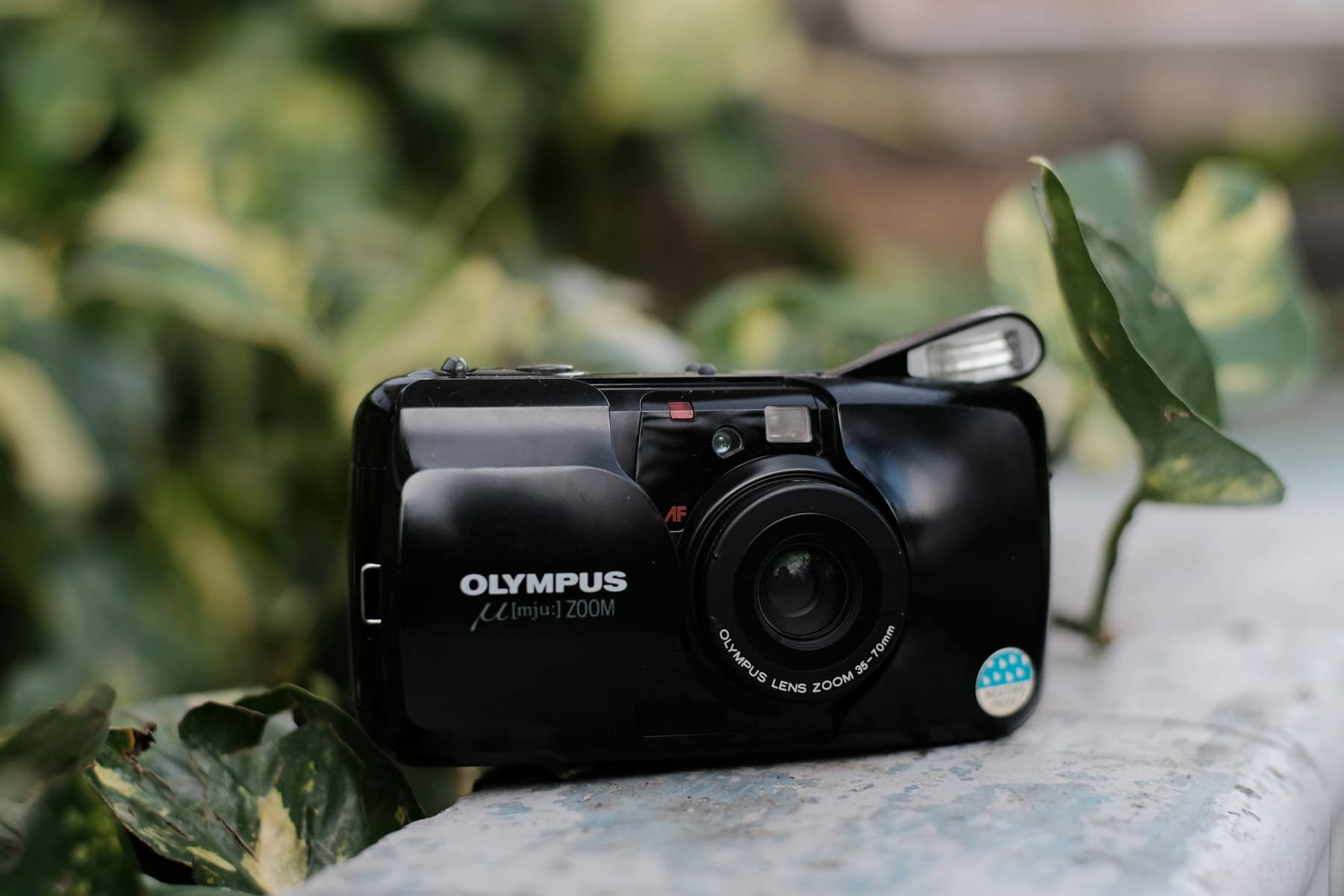
The Olympus Stylus (Mju I) is a pocketable point-and-shoot with a sharp 35mm f/3.5 lens, reliable autofocus, and weatherproof build that delivers excellent image quality for half the price of its famous sibling, the Mju II. It's not perfect (slower lens, occasional corner softness), but it's the best value in premium compacts.
The Olympus Stylus (Mju I) lives in the shadow of its famous sibling, the Mju II, yet many photographers argue it's the smarter buy. While the Mju II commands $250-350 for its f/2.8 lens and cult status, the original Stylus delivers 90% of the performance for $100-180 with the same weatherproof build and pocketable size. The debate: is that extra stop of light worth double the price?
Background & Key Features
Olympus released the Mju I in 1991 as their modern successor to the legendary XA rangefinder, and it launched a series that sold over 20 million units. That's not a typo, 20 million. It was designed by Maitani Yoshihisa (creator of the Olympus PEN, PEN F, and OM series), and it brought autofocus, motorized film transport, and weatherproofing to a package smaller than most wallets. In North America, it was called the Infinity Stylus, which is somehow both more and less memorable.
The plastic clamshell body houses a 35mm f/3.5 triplet lens (3 elements in 3 groups) that focuses down to 0.35m, which is impressively close. Notable features include 100-step autofocus (good for 1991), 1/15 to 1/500s shutter range, DX film speed reading (ISO 50-3200), built-in flash with four modes, and automatic film advance and rewind. At 170g and measuring just 12×6×4cm, it's genuinely trouser-pocketable, which matters if you actually want to carry it everywhere.
The Mju I earned prestigious design awards throughout the 1990s and remains one of the most ergonomic compacts ever made. Olympus got the ergonomics right on the first try.
Design & Handling
The curved plastic body fits the hand perfectly, which is rare for compacts from this era. The sliding clamshell cover doubles as power switch and lens protection, opening and closing with satisfying precision. At 170g (6oz), it feels substantial without weighing down pockets. The thumb rest on the back and finger grips on the front create ergonomics that rival cameras three times the price. Olympus really nailed the industrial design here.
The viewfinder is small but functional, showing a center AF frame and parallax correction brackets for close shots. A green LED confirms focus lock, orange warns of low light or flash charging. The large silver shutter button is impossible to miss, which is good design. Two top buttons control flash modes and self-timer. An LCD shows frame count, flash mode, and battery status, which is all you need.
The shutter is reasonably quiet, not silent but not obnoxious either. Film advance whirs audibly but not loud enough to ruin candid moments. One annoyance: the camera resets to auto-flash on every power-up, requiring two button presses to disable. You'll get used to it, but it's still annoying. The clamshell design means no lens cap to lose, and the camera powers on instantly when opened, which is brilliant for grab shots.
How the Olympus Stylus Shoots: Street Photography and Travel Photography Performance
Metering & exposure behavior
The programmed autoexposure tends toward brighter exposures, which works beautifully with negative film's forgiving latitude. In backlit situations, the camera handles highlights well without blowing them out. The 1/15-1/500s shutter range is cleverly chosen: 1/15s is slow enough to avoid needing flash in marginal light (if you have steady hands), while 1/500s at f/16 handles bright daylight with ISO 400 film. For street photography in variable light, the meter adapts quickly without hunting. The camera has no exposure compensation, but the bright-leaning tendency actually helps with backlit subjects.
Focusing experience
The 100-step autofocus is remarkably reliable, locking focus in 85-90% of shots. Half-pressing the shutter locks both focus and exposure (green LED confirms), allowing focus-reframe-shoot technique. The 0.35m minimum focus distance is a game-changer compared to typical 0.8m compacts, opening up close-up possibilities most point-and-shoots can't touch. For street photography, the AF is fast enough for candid work, though there's slight shutter lag as the lens moves to focus position during exposure. Low-light AF occasionally hunts, but the green LED flashing warns you before wasting a frame.
Lens character & image quality
The 35mm f/3.5 triplet lens genuinely punches above its weight. The center is razor-sharp when stopped down in daylight, delivering SLR-level detail that's impressive for a compact. Wide open at f/3.5, the lens shows pleasing character with slightly lower contrast reminiscent of classic Cooke triplet designs. This "soft" rendering at f/3.5 is actually beautiful for portraits and creative work, not a flaw.
The lens does show noticeable corner softness and light falloff, especially at f/3.5. Landscape shooters expecting edge-to-edge sharpness will be disappointed. But for the camera's intended use (snapshots, travel, street photography), the corner softness rarely matters and sometimes adds character. If you're shooting people, you won't notice it.
Color rendition is neutral with good contrast. On Portra 400, skin tones are smooth and natural. On Ektar 100, colors pop with excellent saturation. Black and white film reveals lovely tonal gradation, with HP5 showing rich midtones that make street photography sing.
Bokeh at f/3.5 is surprisingly pleasant for a point-and-shoot, with smooth out-of-focus areas and nicely rounded highlights. The 0.35m close focus combined with f/3.5 creates more background separation than you'd expect from a compact, which is great for portraits.
Flare resistance is good. Minimal vignetting. Virtually no chromatic aberration. Some pincushion distortion is visible in corners with straight lines, but it's not objectionable unless you're shooting architecture.
Film pairings that sing
- Portra 400 for versatile shooting with forgiving latitude that complements the bright-leaning meter
- Kodak Gold 200 for affordable everyday shooting with warm tones perfect for travel and snapshots
- Ektar 100 for maximum sharpness in daylight to leverage the lens's center resolution
- HP5 Plus for classic black and white with rich contrast that suits the lens character
Best Uses: Urban Photography, Portrait Photography, and More
Best at: Travel photography (pocketable, weatherproof), street photography (fast AF, quiet), urban photography (35mm focal length), portrait photography (0.35m close focus), documentary work
Struggles with: Low-light without flash (f/3.5 lens), landscape photography (corner softness), professional work (no manual controls), action photography (shutter lag)
If this is you → pick this body:
- "I want excellent optics in a pocketable camera" → Olympus Stylus
- "I need f/2.8" → Olympus Mju II
- "Budget-conscious" → Pentax Espio
Olympus Stylus vs Olympus Mju II, Yashica T4, and Contax T2
The Mju II offers a faster f/2.8 lens and 400+ focus steps, but it costs $250-350 versus the Stylus's $100-160. That's a significant price difference for one stop of light. The Yashica T4 has the same f/3.5 aperture with more lens character, but it's bulkier and less pocketable. The Contax T2 delivers Zeiss optics and premium build, but at $800-1,200 it's in a completely different price universe.
Choose the Stylus for the best value in pocketable compacts. Choose the Mju II if you shoot low light frequently and the f/2.8 lens justifies doubling your budget. Choose the Yashica T4 if you want more lens character and don't mind the bulk. The Stylus delivers 85% of the Mju II's performance at 40% of the cost, which is the value proposition in a nutshell.
* Prices as of December 2025. Market fluctuates based on condition and availability.
| Camera | Why choose it | Where it loses vs Olympus Stylus | Typical used price* |
|---|---|---|---|
| Olympus Mju II | Faster f/2.8 lens, better low-light, 400+ focus steps | Double the price, harder to find | $250-350 |
| Yashica T4 | Similar f/3.5 lens, more character, good build | Bulkier, less ergonomic, louder | $180-280 |
| Pentax Espio | Very affordable, reliable, simple | Fewer focus steps, less refined optics | $30-60 |
Is the Olympus Stylus Worth It in 2025?
As of December 2025, the Stylus sells for $100-160, up from $10-30 five years ago but still half the Mju II's $250-350. Prices have risen dramatically, but the Stylus remains one of the best values in film compacts. What you're paying for: pocketable size, excellent ergonomics, sharp 35mm lens, 0.35m close focus, weatherproof build.
Worth it for photographers who want a true pocket camera with excellent image quality and won't miss the f/2.8 lens. Not worth it if you shoot primarily in low light (get the Mju II) or need manual controls. Alternatives: Pentax Espio at $30-60; Mju II for low-light at $250-350; Yashica T4 at $180-280. The Stylus is the sweet spot for value-focused photographers.
The Bottom Line
Buy it if
- You want a pocketable camera with excellent optics, shoot primarily in good light, and value smart spending.
Skip it if
- You shoot mostly in low light (get Mju II), need manual controls, or want the cheapest option (Pentax Espio $30).
Consider it if
You're choosing between this and the Mju II and rarely shoot in low light.
Frequently Asked Questions
Is the Olympus Stylus (Mju I) worth it in December 2025?
In December 2025, the Olympus Stylus sells for $100-160. It's worth it for photographers who want genuinely pocketable size, excellent ergonomics, and sharp 35mm optics without spending $250+ on a Mju II. The f/3.5 lens is one stop slower than the Mju II, but for daylight and flash shooting, image quality is nearly identical. In short, if you shoot primarily in good light and value smart spending, the Stylus delivers premium compact performance at half the price.
Olympus Stylus (Mju I) vs Olympus Mju II – which is better?
The Mju II has a faster f/2.8 lens (4 elements), 400+ focus steps versus 100, wider shutter range, and full weatherproofing. The Stylus has a slower f/3.5 lens (3 elements) but costs $100-160 versus $250-350. Choose the Stylus if you shoot primarily in good light and want to save $150+. Choose the Mju II if you shoot in low light frequently and the f/2.8 lens justifies the premium. Image quality in daylight is nearly identical.
What are common problems with the Olympus Stylus (Mju I)?
The most common issues are: film transport problems (stripped gears preventing film advance), shutter button losing sensitivity (requires multiple presses or specific finger position), lens not extending properly (electrical fault), flash not working (capacitor failure), and LCD screen failure (annoying but doesn't prevent shooting). Before buying, test with a battery: check shutter button responsiveness, load junk film to test transport, verify lens extends smoothly, and test flash. Buy from sellers offering returns.
Which film should I start with on the Olympus Stylus?
Start with Portra 400 for its forgiving latitude that complements the camera's bright-leaning meter, beautiful colors, and versatility in varying light. The combination delivers gorgeous results for portraits, travel, and everyday shooting. Once comfortable, try Kodak Gold 200 for affordable everyday shooting or Ektar 100 for maximum sharpness in daylight. For black and white, HP5 Plus shows rich contrast that suits the lens character.
Can the Olympus Stylus handle street photography?
Yes, the Stylus excels at street photography. The pocketable size means you'll actually carry it, fast 100-step AF locks focus quickly, and the quiet operation is discreet for candid work. The 35mm focal length is ideal for street scenes. One quirk: the camera resets to auto-flash on power-up, so press the flash button twice to disable it before shooting. The 0.35m close focus opens up creative possibilities most compacts can't match.
How does the Olympus Stylus perform in low light?
The f/3.5 lens and 1/15s minimum shutter limit low-light performance without flash. For handheld night photography, you'll struggle compared to f/2.8 cameras like the Mju II. However, the 1/15s shutter is slower than many compacts (which often limit to 1/30s or 1/60s), giving you a fighting chance with steady hands. The built-in flash is excellent and well-balanced. For serious low-light work, consider the Mju II or push film to ISO 800-1600.
Is the f/3.5 lens really that much worse than f/2.8?
One stop slower means half the light, which matters in low light but rarely in daylight. The Stylus's f/3.5 triplet lens is sharp in the center and creates pleasant bokeh at close distances. The Yashica T4 also has an f/3.5 lens and is highly regarded. In practice, unless you shoot frequently in marginal light, you won't miss the extra stop. The $150+ savings versus the Mju II buys a lot of film.
Why is the Olympus Stylus so expensive now?
Prices rose from $10-30 five years ago to $100-160 today due to film photography's resurgence, the Mju series' cult status, and the Mju II's celebrity-driven hype (which boosted all Mju models). Of the 5 million Stylus cameras made, many were discarded when digital cameras became ubiquitous, reducing supply. At $100-160, it's still half the Mju II's price and delivers similar daylight image quality.
What's the difference between Olympus Stylus and Olympus Mju I?
They're the same camera with different regional names. "Olympus Infinity Stylus" was the North American name, while "Olympus µ[mju:] I" (or "Olympus Mju I") was used everywhere else. Some later batches were assembled in China with Japanese parts, but there's no quality difference. Functionally identical regardless of name or assembly location.
Related reading
Related Topics
Join the iOS Beta
Join the beta to be the first to experience authentic film photography with Daydream Film.